
Seestar 官方星球

Starfront Observatory - S30 rental review

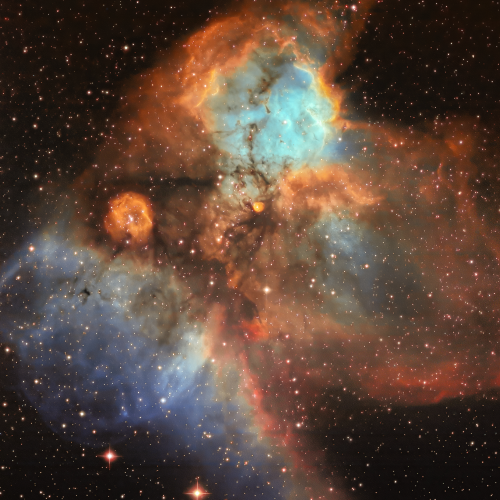
This is an honest review of the Seestar s30 rental now being offered by Starfront Observatory. Like many other UK stargazers I am frequently frustrated by constant cloudy nights and light polluted skies. I'd previously seen adverts for Starfront Observatory in Texas which offered to host people's telescopes under Bortle 2 skies and frequent cloudless nights. Not wishing to part with my scopes I was intrigued to see they've recently started offering to rent out their own seestar s30s for $99 a month. After a fourth week of endless cloudy nights, in late February I took the plunge and paid the initial $1 deposit. This grants you access to their support portal from which you can then request rental of a scope. Accessing the scope is really easy through the Seestar app and before long I was planning out whole nights worth of targets. You are obviously not guaranteed endless clear skies, and once a particular bad front passed I was seeing numerous successful shoots night after night. So much so I'd gone from having captured 40 messier targets and 16 Caldwell targets to having captured 109 messier (that elusive M30!) and 60 Caldwell within 2 months. Granted many of these were low on the horizon and weren't great quality - but I got them. The Seestar s30 provided is on an alt-az mount - so there is the potential for dropped subs due to field rotation on longer shooting sessions. As I was only accessing it through the app there was also no means of downloading all of the fit files and processing them yourself. This meant you're also restricted to some degree on the number of subs you're able to stack within the app. Starfront offer a status page where you can see whether the roofs are open or not and they also provide updates via their Discord server. Starfront Status Page Was it all plain sailing? Unfortunately not - the Telescope Network function within the Seestar app is still very new and at the time I was prone to countless disconnects and then being unable to reconnect, resulting in me having to log a ticket with Starfront to get them to reset the scope. Because of the 5 / 6hr time difference this sometimes took a while, especially at weekends. Since then this function has been massively improved with recent firmware updates and seems more reliable. The ZWO staff were also on holiday at the time for Chinese New Year so that didn't help with issues getting resolved quickly either. Starfront themselves are also very new to this process and are learning as they go - at one point the scope I was renting was given to someone else 9 days before my subscription ended and they promptly wiped all my data. Starfront profusely apologised and it does sound as though they've learnt some lessons from this misshap. Given those issues would I go back? Definitely - but I would plan ahead properly this time. I'd check the weather forecast in Texas and plan what targets I'd intend to shoot (for the first 10 days the roofs stayed closed due to them having sub-zero temperatures!). Being UK based we're not blessed with great weather and if they offered scopes on eq mounts with the ability to download all of your fit files I'd be back in a heartbeat. Below are just a couple of the pics i shot out there - all processed simply in the seestar app. All of the shots I took out there can be found in the Seestar app by searching for #StarfrontObservatory# (as mentioned above I'll readily admit that some of the shots of targets low on the horizon don't look great at all). For anyone else who is currently frustrated by the constant bad weather I'd strongly recommend giving it a go. It's really easy in this hobby to become disinterested or disheartened - being able to check my tablet each morning to see how the scope was getting on in Texas helped me keep that spark going. Check out Starfront Observatory here. If you do sign up for a subscription be aware you'll be signed up to a monthly rolling contract so will be automatically charged each month.
讨论 0
收藏
ASIAIR 官方星球

ASIAIR v2.5.2 has been released!

We’re excited to announce that v2.5.2 is now officially available on the App Store and Google Play! Thanks to all users who helped in the beta period. Especially the Admins and Testers.Optimized & FixedFixed occasional disconnections of the mount and guide camera(iOS & Android)Fixed export formatting issues in Plan mode(iOS)Fixed occasional crashes that occurred after successful auto-reconnection of third-party mounts(Android)NotesThis version distributed via Google Player only supports Android devices with ARM/ARM64 architecture and does not support x86/x86_64 devices. If your Android device uses an Intel or AMD processor—commonly found in certain tablets, 2-in-1s, or mini PCs—please download the compatible installer from the ZWO official website.
讨论 2
收藏
观星新手村

有合适的耐低温线材吗?

如题,本人冬季第一次出摊拍摄深空目标,发现原厂电源线很快就会被冻硬(温度大概-20),不知道有什么线材能做到这个温度(甚至更低)能保证一定的可塑性。
讨论 2
收藏
观星新手村

What cables you use for deep-sky imaging in low temp?

As the title says, this is my first time shooting deep-sky targets in winter conditions. I found that the stock power cables from the manufacturer get stiff very quickly at around -20°C. I’m wondering if there are specific types of cables that can remain flexible at this temperature (or even lower), while still being reliable for astrophotography setups. Any recommendations on cable materials, brands, or where to buy would be appreciated.
讨论 3
收藏
Seestar 官方星球

Measuring the Sun's rotation using Seestar S50

Measuring the Sun's rotation will help us better understand some fundamental principles of astronomical observation and unlock some of Seestar's capabilities. Of course, this exercise can be done with any type of telescope, as long as you take the necessary safety measures for solar observations. The complete procedure is described here
讨论 1
收藏
深空摄影

Balancing gear, conditions and expectations in backyard astrophotography. Recent sessions with M42 and an M31 mosaic made me rethink what really matters: not perfect data, but the ability to adapt — to short imaging windows, aurora, limited horizons, and the constant trade-offs between equipment, time and sky conditions.

Over the past weeks I have found myself thinking more about the process of astrophotography than the results.My recent sessions with M42 were a good example. The reality of my backyard setup is simple: trees block a significant part of the horizon, the window of true darkness is short, and on top of that, auroral activity is often present. On paper, these are far from ideal conditions. In practice, they define everything I do.On two separate nights I managed to capture only 15 × 180-second exposures before Orion disappeared behind the trees. Not much, at least by typical standards. And yet, that data still became an image — not because it was perfect, but because it was enough.At the same time, I’ve been working on a mosaic of M31 using the Seestar S50. A very different approach: shorter exposures, many more frames, and a system that simplifies acquisition but shifts the challenge toward planning and processing. Building a mosaic under variable conditions is not just about collecting panels — it’s about consistency, overlap, and how well everything comes together in the end.These two projects made me think about how much of astrophotography is actually about managing constraints.Equipment matters, of course. I’ve been considering different setups, filters, and even potential upgrades. But the more I image, the more I realize that gear is only part of the equation. The real challenge is aligning three things: time, sky, and expectations.Time is always limited — by weather, by season, by everyday life.The sky is unpredictable — transparency, gradients, aurora.Expectations, however, are fully adjustable.That last part is probably the most important.It’s easy to aim for perfect integration times, perfect conditions, perfect data. But in reality, most sessions are compromises. The question is not whether conditions are ideal, but whether they are usable.I’ve started to appreciate images not just for how they look, but for what they represent: short windows used efficiently, difficult conditions managed, and decisions made along the way. Whether it’s extracting signal from 1.5 hours of M42 data or stitching together a mosaic of M31 from many short exposures, the underlying idea is the same — make the most of what you have.In that sense, astrophotography becomes less about chasing perfection and more about building resilience into the process.And maybe that’s the most interesting part of all.
讨论 1
收藏
天文聊天局

Hello everyone! Im new to this app

new here, just wanted to say hi 👋 Been interested in astronomy for almost a decade now.
讨论 4
收藏
图像处理小技巧

Anyone capturing the Moon passing over the Pleyades?

Does anyone have a chance of making a photo or timelapse of the Moon passing over the Pleyades? My sky does not allow me to... still day light is so strong. Please, post your results if you get something nice and explain your technique. 👍😁
讨论 1
收藏
NEW
探索星球
创建星球
问题榜单
1望远镜的目镜选择?
2如何在城市里(六级区)出摊打野拍深空?而且新购入的设备总价不超过一万?
3Pixinsight - is it worth it ? How is the learning curve ?
4Sun Guardian Badge - best tips?
5Help with the Moon Phase Tracker?
6What are y’all’s favorite deep sky objects?
7Sirius Warrior - new badge / new questions !?
8Who’s going to AstroCon2025 at Bryce Canyon?
想法榜单
1Notice: Temporary Suspension of Badge Task Reviews During the Holiday (Feb.11–Feb.23)
2🚀 Seestar S30 Pro Post-Processing Challenge is LIVE on Facebook! 🌌
3whitch tools do you use in siril for processing?
43iatlas how can I see from Scotland next
5我有一个手搓的折反望远镜,口径117mm,焦距900mm,可以拍什么?
6Seestar S50 advert -fan made .......
7Lego made solar finder
8关于超级蓝月亮,全面的问题解答(Super Blue Moons: Your Questions Answered)
9Sirius Warrior Acquisition Group (SWAG)
10关于月食的一切,类型、图像以及发生的频率。