

Hubble revisits Crab Nebula to track 25 years of expansion
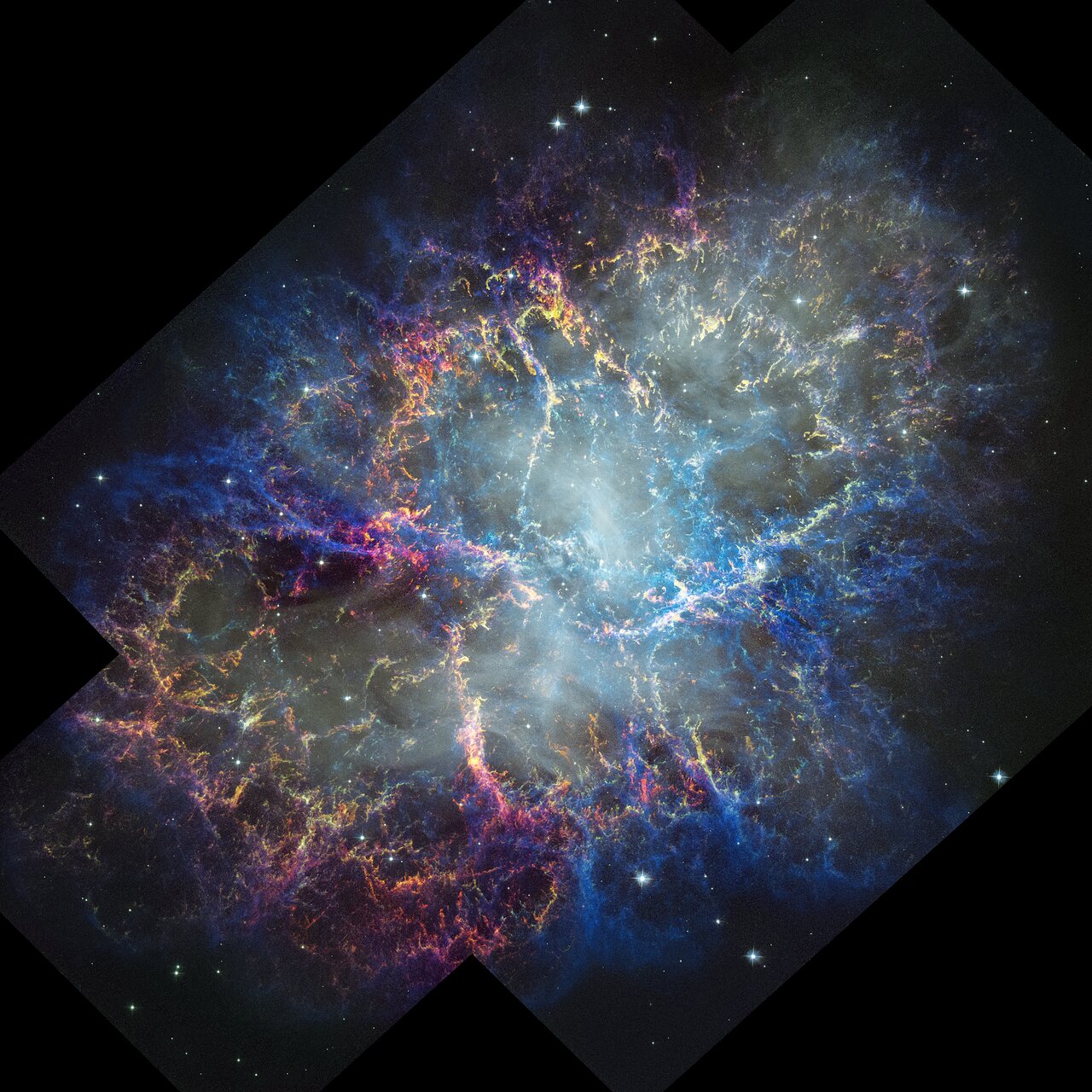
Nearly a millennium ago, astronomers witnessed a brilliant new star blazing in the sky — a supernova so bright it was visible in daylight for weeks. Today, its expanding remnant, the Crab Nebula, continues to evolve 6,500 light-years away. First linked to historical records by Edwin Hubble, the nebula has since been studied in exquisite detail by the NASA/ESA Hubble Space Telescope, which has now revisited this ancient explosion to trace its ongoing expansion and transformation.
A quarter of a century after the first full observation of the Crab Nebula, the Hubble Space Telescope has once again observed this supernova remnant. The Crab Nebula is the remnant of the SN 1054 supernova explosion, located in the constellation Taurus, 6,500 light-years from Earth.
The new image clearly shows the nebula’s complex filamentary structure, as well as the changes in these gases as they continue to expand outward over 25 years at speeds of up to 5.5 million kilometers per hour. Scientists found that the outer regions show more pronounced expansion, while the central region is influenced by energy released from the internal pulsar.
The research team also used the new data to further analyze the three-dimensional structure of the Crab Nebula, and combined observations from other telescopes such as the James Webb Space Telescope to study in greater depth the remnants left behind by this supernova explosion from a thousand years ago.