

Meet the Constellation: Leo
Leo is one of the most recognizable constellations in the spring night sky.
As the winter constellations fade into the west, Leo rises in the evening with its large size, clear shape, and bright stars, making it a great target for beginners.
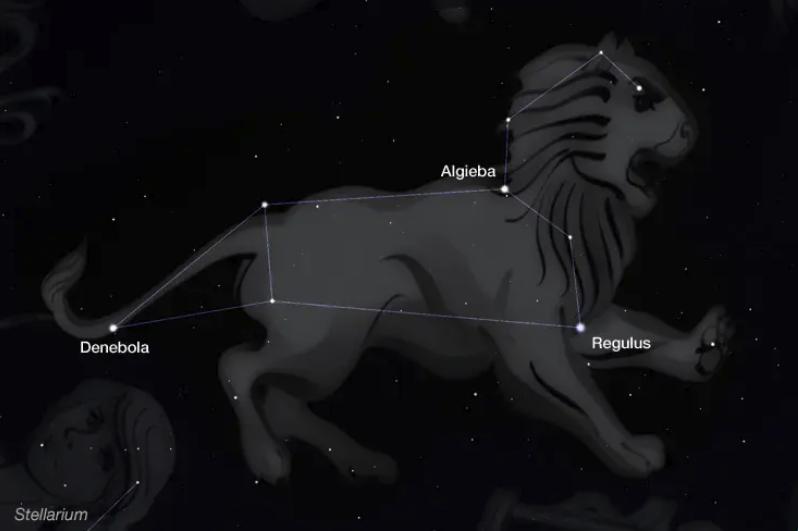
The easiest part of Leo to identify is the “Sickle” shape, which looks like a backward question mark and represents the lion’s head and mane.
Some of Leo’s most famous stars include:
- Regulus — the brightest star in Leo, often called the “Little King.” It lies close to the ecliptic, so the Moon and planets occasionally pass in front of it.
- Denebola — located at the lion’s tail, this bright star spins very rapidly.
- Algieba — a famous double-star system that can be split into two golden stars with a small telescope.
In Greek mythology, Leo is linked to the story of Hercules defeating the Nemean Lion.
Ancient Babylonian, Sumerian, and Arabic cultures also saw this region of the sky as a lion.
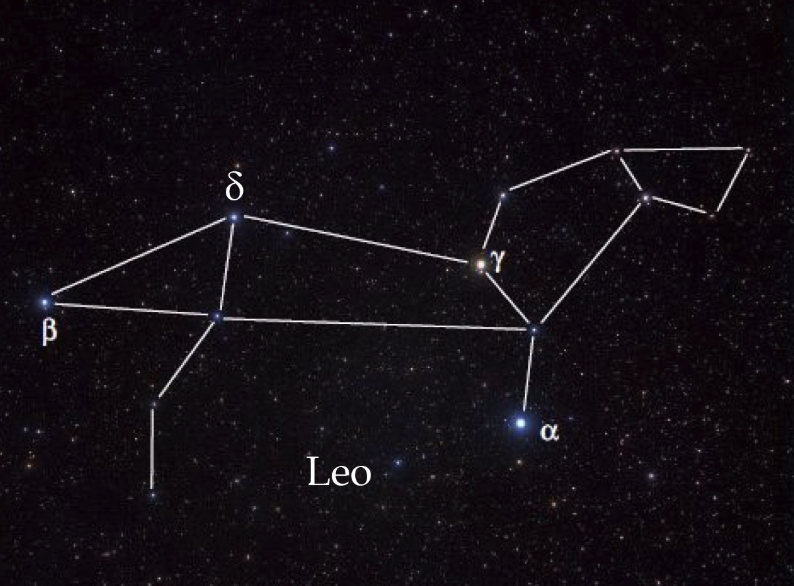
On spring evenings, Leo can usually be found high in the southeastern sky.
If you are unsure where to start, first locate bright Regulus, then follow the stars above it to trace the Sickle shape and the outline of the celestial lion.